Can You Fly to Antarctica? Everything You Need to Know
While many people assume the only way to reach the White Continent is by crossing the Drake Passage on a cruise ship, flights to Antarctica are a real and increasingly popular option. They allow travelers to skip several days at sea and begin their expedition much sooner.
However, flying to Antarctica is often misunderstood. Most expeditions do not involve sightseeing flights around the continent or traveling between Antarctic destinations by airplane. Instead, flights are used to reach Antarctica, and the exploration itself happens on the ground or aboard an expedition vessel.
If you're wondering whether you can fly to Antarctica, here's exactly how it works.
Where Do Flights to Antarctica Land?
For travelers visiting the Antarctic Peninsula, flights operate from Punta Arenas in southern Chile to King George Island in the South Shetland Islands.
This is one of the few locations in Antarctica with an airstrip capable of receiving expedition flights. After landing, travelers begin the Antarctic part of their journey.
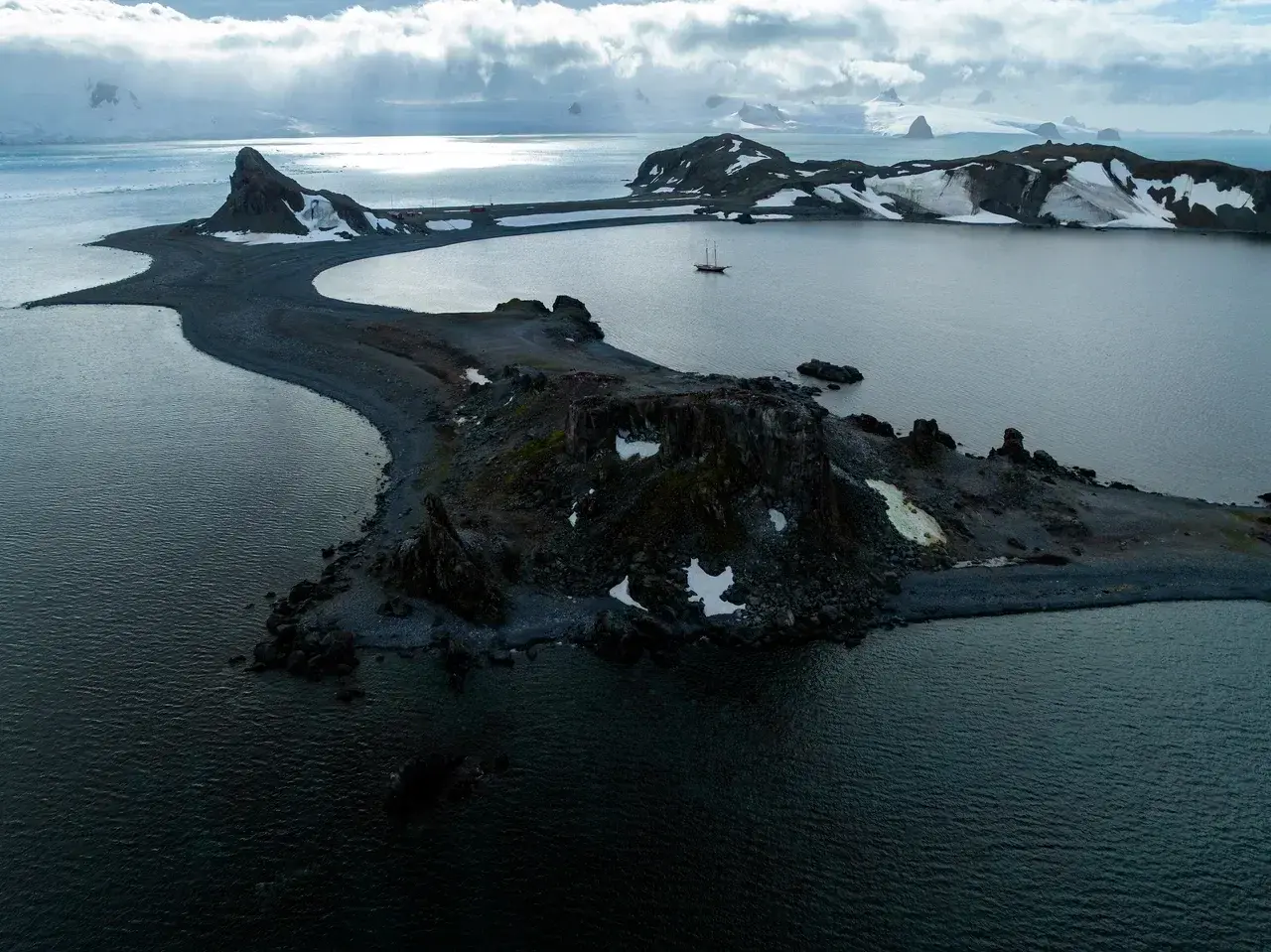
With MoreTime Expeditions, guests board a small sailing vessel after arriving on King George Island and spend the expedition exploring the Antarctic Peninsula region by sea.
Can You Fly Directly From the USA or Europe?
No.
There are no regular commercial flights from North America or Europe directly to Antarctica.
A typical itinerary looks like this:
- Fly from your home country to Santiago, Chile.
- Continue to Punta Arenas.
- Take the expedition flight to King George Island.
- Begin your Antarctic expedition.
This means Antarctica is accessible, but it still requires traveling through southern South America first.
What Is Fly & Sail Antarctica?
Fly & Sail is one of the most efficient ways to visit Antarctica.
Instead of spending several days crossing the Drake Passage, travelers fly directly to King George Island and join a sailing expedition there. From that point onward, the journey takes place aboard a small expedition yacht exploring glaciers, icebergs, wildlife and remote bays around the Antarctic Peninsula.
The return journey follows the same pattern: after the expedition, guests fly back to Punta Arenas.
MoreTime Expeditions offers Fly & Sail programs for travelers who want to maximize their time in Antarctica while minimizing time spent crossing the Southern Ocean.
Do You Fly Around Antarctica During the Expedition?
No.
This is one of the biggest misconceptions about Antarctic travel.
The aircraft is used only to travel between South America and Antarctica. Once you arrive, exploration happens aboard the sailing vessel or, depending on the itinerary, by Zodiac during shore activities.
There are no tourist flights between glaciers, penguin colonies or Antarctic destinations as part of these expeditions.
Is Flying Better Than Crossing the Drake Passage?
It depends on the experience you're looking for.
Flying is ideal if you want to:
- Spend more time exploring Antarctica.
- Avoid several days on the open ocean.
- Reduce the overall length of your trip.
Sailing across the Drake Passage is better if you want the Southern Ocean itself to be part of the adventure.
Many experienced polar travelers consider the Drake one of the defining parts of an Antarctica expedition. Others are happy to skip it entirely and begin their journey in Antarctica.
MoreTime Expeditions also offers a third option: sail across the Drake in one direction and fly the other way, combining both experiences in a single trip.
What Happens After You Land?
Landing on King George Island is only the beginning.
After a short transfer, travelers board the sailing vessel and begin exploring the Antarctic Peninsula and surrounding islands. Days are spent navigating through iceberg-filled waters, observing wildlife, visiting research stations and discovering remote polar landscapes.
The expedition remains flexible, with routes adapting to weather, sea ice and wildlife conditions.
This is why flying does not make the journey less adventurous — it simply changes how you reach Antarctica.
Is Flying to Antarctica Safe?
Yes, but Antarctic aviation is highly weather dependent.
Flights operate only when conditions allow safe landings and takeoffs. Because weather can change quickly, departures may occasionally be delayed.
For this reason, it's always recommended to leave some flexibility around your international flights before and after the expedition.
Experienced operators plan their itineraries with these conditions in mind and prioritize safety over fixed schedules.
Can You Combine Flying With Other Antarctica Experiences?
Absolutely.
In addition to Fly & Sail expeditions, travelers can combine selected sailing journeys with the Antarctic Science Camp at Bellingshausen Station on King George Island.
This allows visitors not only to explore Antarctica aboard a sailing vessel but also to experience life at an active polar research station and participate in real field activities.
It's one of the most immersive ways to experience the White Continent beyond a traditional Antarctica cruise.
Should You Fly to Antarctica?
If your priority is spending as much time as possible exploring the Antarctic Peninsula, flying is an excellent option. It shortens the journey without sacrificing the expedition experience, since the adventure continues aboard a small sailing vessel after landing.
If, on the other hand, crossing the Drake Passage has always been part of your dream, a full sailing expedition may be the better choice.
Whichever format you choose, Antarctica remains one of the world's most extraordinary destinations — and there are now more ways than ever to reach it.
Contact MoreTime Expeditions to compare Fly & Sail programs, one-way Drake Passage expeditions and Antarctic Science Camp itineraries, and find the Antarctica journey that fits your style of adventure.