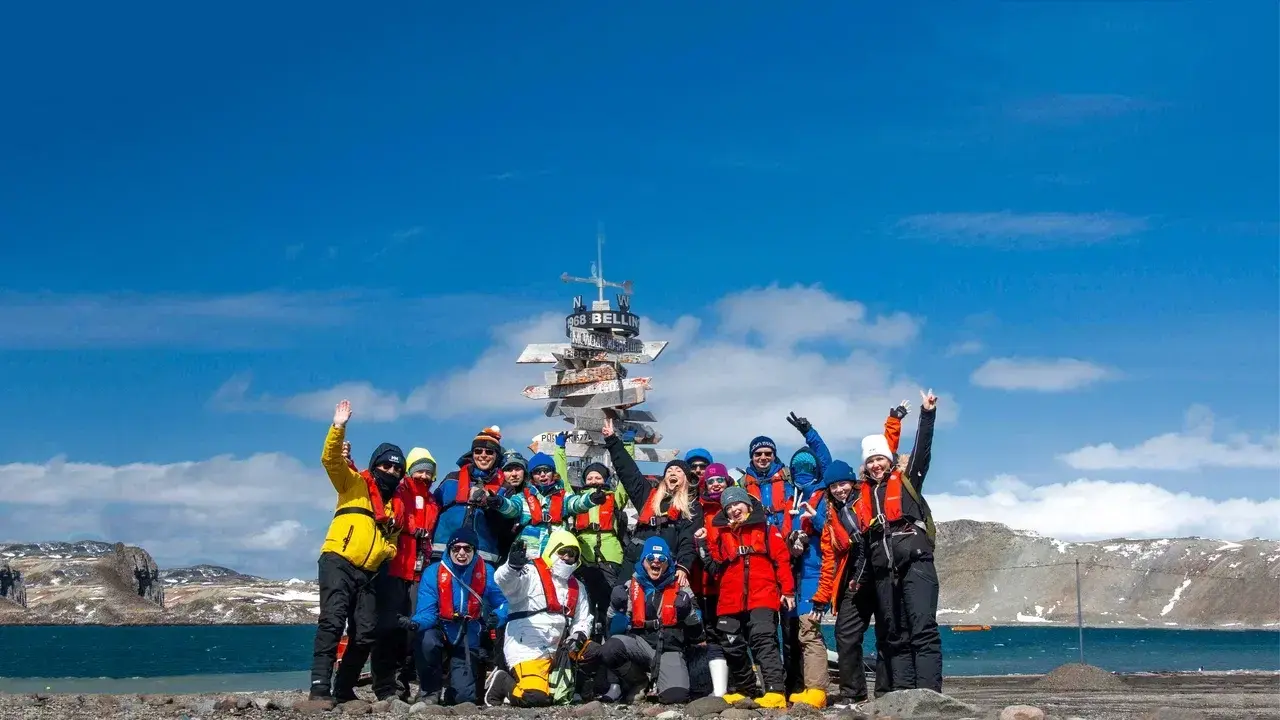
What Is Bellingshausen Station? A Guide to Antarctica’s Historic Research Base
Located on the rugged coast of King George Island, Bellingshausen Station is one of the most recognizable scientific outposts in the South Shetland Islands. Surrounded by glaciers, volcanic beaches, wildlife, and several international research bases, it offers a fascinating glimpse into everyday life and scientific work in Antarctica.
Most travelers who reach this part of the continent see the station only during a short landing. With MoreTime Expeditions, guests can experience the area in a much more immersive way—either during a small-group sailing expedition or while staying beside the station as part of the Antarctic Science Camp.
Where Is Bellingshausen Station?
Bellingshausen Station is situated on King George Island, the largest of the South Shetland Islands. The island lies approximately 120 kilometers north of the Antarctic Peninsula and is one of the most accessible areas of Antarctica.
King George Island is unusual because several countries operate research stations relatively close to one another. Scientists, engineers, pilots, technicians, and expedition teams from around the world live and work here, creating a small but highly international Antarctic community.
The island also has an airfield, which makes it an important arrival point for travelers participating in Fly & Sail Antarctica expeditions. Instead of crossing the Drake Passage by sea, guests can fly to King George Island and begin their Antarctic journey directly from there.
A Brief History of Bellingshausen Station
Bellingshausen Station was established in 1968 and named after explorer Fabian Gottlieb von Bellingshausen, one of the leaders of the expedition associated with the first confirmed sightings of the Antarctic continent in 1820.
For more than five decades, the station has supported scientific research, environmental observations, communications, and expedition logistics.
Today, it remains an active, year-round Antarctic base. Scientists and technical specialists live at the station throughout the summer season, while a smaller team usually remains during the long Antarctic winter.
What Scientific Research Takes Place at Bellingshausen Station?
Antarctic research stations are essential for studying processes that affect not only the polar regions but the entire planet.
Research and observations conducted in the Bellingshausen area may include:
- Meteorology and long-term weather monitoring
- Atmospheric studies
- Glaciology
- Geology
- Oceanographic observations
- Antarctic biology and ecosystem research
- Environmental monitoring
- Studies of snow, ice, and coastal conditions
The information collected at Antarctic stations helps scientists understand climate patterns, changes in glaciers, atmospheric processes, marine ecosystems, and the effects of human activity in polar environments.
Because research takes place over many years, the station can provide valuable long-term records from one of the world’s most rapidly changing regions.
What Is Life Like at an Antarctic Research Station?
Life at Bellingshausen Station is very different from life in an ordinary town.
The station is isolated, weather conditions can change quickly, and every part of daily life depends on careful planning. Food, fuel, equipment, construction materials, and scientific instruments must all be transported over long distances.
Station personnel are responsible not only for scientific projects but also for maintaining buildings, communications systems, vehicles, generators, and safety equipment.
During the summer, the area is active with researchers, logistics teams, visiting expeditions, and vessels. In winter, the community becomes much smaller, daylight decreases dramatically, and residents may spend months with limited opportunities to leave the island.
Despite these challenges, Antarctic stations often develop a strong sense of community. Cooperation is essential, and people from neighboring bases frequently assist one another with transportation, logistics, emergencies, and scientific work.
Bellingshausen Station and the International Community on King George Island
One of the most interesting aspects of King George Island is the concentration of international research stations.
Several bases are located within a relatively small area, allowing scientists and expedition teams from different countries to communicate and cooperate. This makes the island one of Antarctica’s most internationally connected scientific regions.
Visitors may see research buildings, antennas, storage facilities, vehicles, laboratories, and equipment designed to operate in extreme conditions. The landscape can feel like a combination of a remote scientific settlement and a true polar wilderness.
Just beyond the station infrastructure are glaciers, beaches, lakes, mountains, and wildlife habitats.
Can Tourists Visit Bellingshausen Station?
Visits to active Antarctic research stations are never guaranteed. Scientific work, safety requirements, weather conditions, environmental regulations, and station operations always take priority.
Some expedition itineraries may include a landing in the area when permission and conditions allow. However, visits are generally short and carefully managed to avoid interfering with scientific activities.
Travelers should remember that Bellingshausen is a working research facility rather than a conventional tourist attraction. Access to operational buildings or laboratories may be restricted.
Even when indoor access is unavailable, exploring the surrounding area can provide a valuable understanding of how people live and work in Antarctica.
Spend a Week Beside the Station at the Antarctic Science Camp
For travelers seeking a deeper experience, MoreTime Expeditions’ Antarctic Science Camp offers the rare opportunity to spend several days living near an active Antarctic research community.
Instead of arriving for a brief landing and leaving shortly afterward, participants can stay in the area for approximately one week. This creates time to explore the landscape, learn about Antarctic science, observe local wildlife, and understand the realities of life at the end of the world.
Depending on the program, weather, and operational conditions, the experience may include:
- Meetings with polar researchers and expedition specialists
- Educational talks and practical workshops
- Guided walks through the surrounding landscape
- Wildlife observation
- Visits to scientific and historical sites
- Environmental monitoring activities
- Opportunities to learn how Antarctic fieldwork is organized
- Discussions about climate, glaciers, oceans, and polar ecosystems
The purpose of the camp is not simply to bring people to Antarctica. It is to help participants understand the continent through direct experience, education, and responsible interaction with the environment.
Take Part in Real Antarctic Science
One of the defining features of the Antarctic Science Camp is the connection between exploration and scientific learning.
Participants may be introduced to methods used for environmental observations and data collection. Activities can vary depending on current projects, local conditions, and the specialists present during the program.
MoreTime Expeditions also supports environmental monitoring initiatives, including the collection of information related to the Antarctic marine environment and underwater noise.
This gives guests a different perspective on expedition travel. Rather than remaining passive observers, they can learn how field data is collected, why long-term monitoring matters, and how responsible operators can contribute to scientific understanding.
Visit Bellingshausen Station During a Sailing Expedition
Bellingshausen Station may also be included in a MoreTime Expeditions sailing itinerary when weather, sea ice, permissions, and station operations allow.
Small expedition yachts offer a more flexible way to explore Antarctica than large cruise ships. Because the group is small, itineraries can sometimes be adjusted more easily in response to local opportunities and changing conditions.
A visit may include time ashore near the station, walks through the surrounding landscape, and an introduction to the history and scientific importance of King George Island.
However, flexibility is essential. In Antarctica, nature determines the schedule, and no landing can be promised in advance.
What Can You See Around Bellingshausen Station?
The area surrounding the station contains a surprising variety of landscapes and points of interest.
Glaciers and Ice-Covered Mountains
King George Island is largely covered by ice, and glaciers dominate many views. Depending on the route and conditions, visitors may see glacier fronts, snowfields, meltwater streams, and dramatic coastal scenery.
Volcanic Beaches
The South Shetland Islands have a volcanic history. Dark beaches and rocky shores create a striking contrast with the white snow, blue ice, and surrounding ocean.
Antarctic Wildlife
Wildlife sightings vary by season, but the area may be home to:
- Gentoo penguins
- Chinstrap penguins
- Weddell seals
- Southern elephant seals
- Skuas
- Giant petrels
- Antarctic terns
- Other seabirds
All wildlife encounters must follow Antarctic visitor guidelines. Guests must maintain appropriate distances and avoid blocking the animals’ natural routes.
Lakes and Ice-Free Ground
During the summer, parts of King George Island become free of snow. Small lakes, streams, mosses, lichens, and exposed rock can be seen around the station area.
Although Antarctic vegetation is limited, these fragile ecosystems are scientifically important and must be protected from trampling or contamination.
Holy Trinity Church
One of the best-known landmarks near Bellingshausen Station is Holy Trinity Church, a small wooden Orthodox church overlooking the surrounding landscape.
Its traditional architecture creates an unexpected sight in Antarctica and makes it one of the most photographed buildings on King George Island. Access depends on local conditions and operational arrangements.
When Is the Best Time to Visit?
The main Antarctic travel season runs from approximately November to March, during the Southern Hemisphere summer.
Each part of the season offers a different experience.
November and Early December
The landscape is often covered in fresh snow, and the environment feels especially pristine. Sea ice may still be present, and wildlife is beginning its breeding season.
Late December and January
These months offer long daylight hours and active wildlife. Penguin colonies are busy, and temperatures are generally at their mildest.
February and March
Later in the season, visitors may see growing penguin chicks and increased whale activity in some areas. More exposed rock and ice-free ground may also be visible.
Weather remains unpredictable throughout the entire season. Wind, fog, snow, sea ice, and ocean conditions can affect flights, sailing routes, landings, and outdoor activities.
Fly or Sail to King George Island
There are two main ways to reach the Bellingshausen Station area with an expedition.
Sailing Across the Drake Passage
A traditional sailing expedition usually begins in southern South America and crosses the Drake Passage before reaching the South Shetland Islands.
The crossing is part of the adventure and provides a strong sense of arrival. Guests can participate in life aboard the yacht, learn about sailing, watch seabirds, and experience the transition from the open Southern Ocean to Antarctica.
However, the Drake Passage can be rough, and the journey usually takes several days.
Flying Across the Drake Passage
Travelers who are concerned about seasickness or have limited time may prefer a Fly & Sail expedition.
A flight brings guests directly to King George Island, bypassing the ocean crossing. After arrival, they can board the expedition yacht or travel to the Antarctic Science Camp.
This option makes Antarctica more accessible to people who want the intimacy of a small sailing expedition without enduring the Drake Passage by sea.
Why Explore Bellingshausen Station with a Small Group?
Large expedition ships may bring hundreds of passengers to Antarctica, while sailing yachts and land-based camps operate with much smaller groups.
Small-group travel can offer several advantages:
- More personal contact with guides and specialists
- Greater flexibility
- More time for questions and discussion
- A quieter atmosphere
- Easier wildlife observation
- More active participation
- A stronger sense of expedition life
On a sailing yacht, guests may also help raise sails, take the helm under supervision, assist with everyday routines, or simply watch the professional crew work.
No previous sailing experience is required. Participation is optional, and safety always remains the responsibility of the trained crew.
Responsible Travel Near an Antarctic Research Base
Antarctica is one of the most environmentally sensitive places on Earth. Visiting it responsibly requires strict attention to wildlife, waste management, biosecurity, and local regulations.
MoreTime Expeditions follows a leave-no-trace approach. All waste generated at the Antarctic Science Camp is removed from the area, and nothing is intentionally left behind.
Guests must also clean clothing and equipment before landings to reduce the risk of introducing seeds, soil, microorganisms, or other non-native material.
Additional responsible practices include:
- Keeping a safe distance from wildlife
- Never feeding or touching animals
- Staying on approved routes
- Avoiding fragile moss and lichen
- Taking nothing from the environment
- Leaving natural and historical objects undisturbed
- Following the instructions of guides and station personnel
Small sailing yachts also produce less noise and disturbance than large passenger ships. This is particularly important in an environment where both wildlife and scientific instruments can be affected by human activity.
What Should You Bring?
Weather around King George Island can change within minutes, so proper clothing is essential.
Recommended items generally include:
- Waterproof expedition jacket
- Waterproof trousers
- Warm thermal base layers
- Fleece or insulated mid-layers
- Warm hat
- Waterproof gloves
- Spare gloves
- Sunglasses with UV protection
- Sunscreen
- Warm socks
- Waterproof boots
- Small daypack
- Camera with spare batteries
- Reusable water bottle
Visitors should dress in layers so clothing can be adjusted during walks and changing weather conditions.
MoreTime Expeditions provides a detailed packing list before departure.
Is Bellingshausen Station Worth Visiting?
Bellingshausen Station offers something different from the classic image of Antarctica.
It is not only a place of glaciers, penguins, and dramatic scenery. It is also a place where people live, conduct research, maintain equipment, collect data, and cooperate under difficult conditions.
Visiting the area can help travelers understand that Antarctica is both a wilderness and a working scientific continent.
For those who stay at the Antarctic Science Camp, the experience goes even further. Spending several days beside an active research community provides time to observe, learn, ask questions, and develop a more meaningful connection with the polar environment.
Experience Bellingshausen Station with MoreTime Expeditions
Bellingshausen Station represents the meeting point of Antarctic history, science, international cooperation, and exploration.
Whether you arrive during a small-group sailing expedition or spend a week at the Antarctic Science Camp, you will discover a side of Antarctica that most visitors never see.
You will not simply pass through the landscape. You will learn how people work there, how scientific observations are made, how fragile polar ecosystems are protected, and why Antarctica matters to the entire planet.
With MoreTime Expeditions, the journey becomes more than a visit to a remote destination. It becomes an opportunity to experience Antarctica from the inside.