How to Travel in Antarctica: Ships, Yachts, Zodiacs and Flights
Getting to Antarctica is only the beginning. Once you arrive, another question appears: how do you actually travel in Antarctica?
There are almost no roads, no public transportation between destinations and no conventional network of airports connecting tourist attractions. Antarctica is a wilderness, and movement depends heavily on weather, sea ice and local conditions.
For travelers visiting the Antarctic Peninsula, most exploration happens by ship or sailing vessel, with Zodiac boats used for shorter excursions. Aircraft mainly serve as a way to reach or leave Antarctica rather than as everyday transportation within the region.
Here is how Antarctic travel actually works.
Traveling Around Antarctica by Expedition Ship
Expedition ships are the most common form of transportation for tourists in Antarctica.
Most traditional Antarctica cruises navigate between islands, bays and channels around the Antarctic Peninsula. Passengers sleep and eat aboard the ship while the vessel moves between different areas.
Larger expedition ships can provide more onboard facilities, but they also carry significantly more passengers.
For travelers looking for something smaller and more expedition-focused, sailing vessels offer another option.
Exploring Antarctica by Sailing Yacht
A small sailing vessel changes the scale of the entire journey.
Instead of traveling aboard a large cruise ship with hundreds of passengers, you live and travel with a small group. The yacht becomes both your transportation and your accommodation.
MoreTime Expeditions uses sailing vessels to explore the Antarctic Peninsula region and surrounding islands. When conditions allow, the vessels can travel under sail, making the journey itself part of the polar experience.
Their smaller scale can also provide greater flexibility when exploring bays, channels and anchorages that may be impractical for much larger vessels. However, the route is never completely fixed: wind, weather, sea ice, safety considerations and environmental regulations always determine what is possible.
This flexibility is one of the defining characteristics of an Antarctic expedition.
How Do You Get Ashore?
When conditions and the itinerary allow a shore visit, travelers generally do not simply dock the expedition vessel at a port.
There are very few conventional port facilities in Antarctica.
Instead, small inflatable expedition boats known as Zodiacs are commonly used to travel between the main vessel and shore.
Zodiacs can also be used for excursions without landing. Traveling close to the water provides a completely different perspective on icebergs, glaciers, rocky coastlines and wildlife.
A Zodiac excursion may take you through an ice-filled bay or along a remote coastline before returning to the main vessel.
As with everything in Antarctica, these activities depend on weather, ice and safety conditions.
Can You Travel Around Antarctica by Plane?
Aircraft play an important role in some Antarctic journeys, but they are not the equivalent of domestic flights between tourist destinations.
For Fly & Sail expeditions to the Antarctic Peninsula, travelers can fly from Punta Arenas in Chile to King George Island.
After landing, they board their sailing vessel and continue exploring Antarctica by sea.
MoreTime Expeditions also offers journeys where travelers cross the Drake Passage under sail in one direction and fly between King George Island and Punta Arenas in the other.
The important distinction is that the flight is used to cross between South America and Antarctica. You are not flying from one penguin colony, glacier or bay to another during the expedition.
Can You Travel Around Antarctica by Car?
Not in the way you would travel around another country.
Research stations may use specialized vehicles for local logistical and scientific operations, but Antarctica does not have a road network connecting its major regions.
There are no rental cars, intercity buses or highways for tourists.
The enormous distances, glaciers, mountains, sea ice and extreme weather make conventional overland travel impossible across most of the continent.
For visitors to the Antarctic Peninsula, the sea is effectively the main transportation network.
How Do You Explore Antarctica From a Polar Station?
There is another way to experience local travel in Antarctica: stay at the Antarctic Science Camp at Bellingshausen Station on King George Island.
Here, you are not continuously moving from destination to destination aboard a ship. Instead, you live at an active polar station and explore the surrounding environment as part of the program.
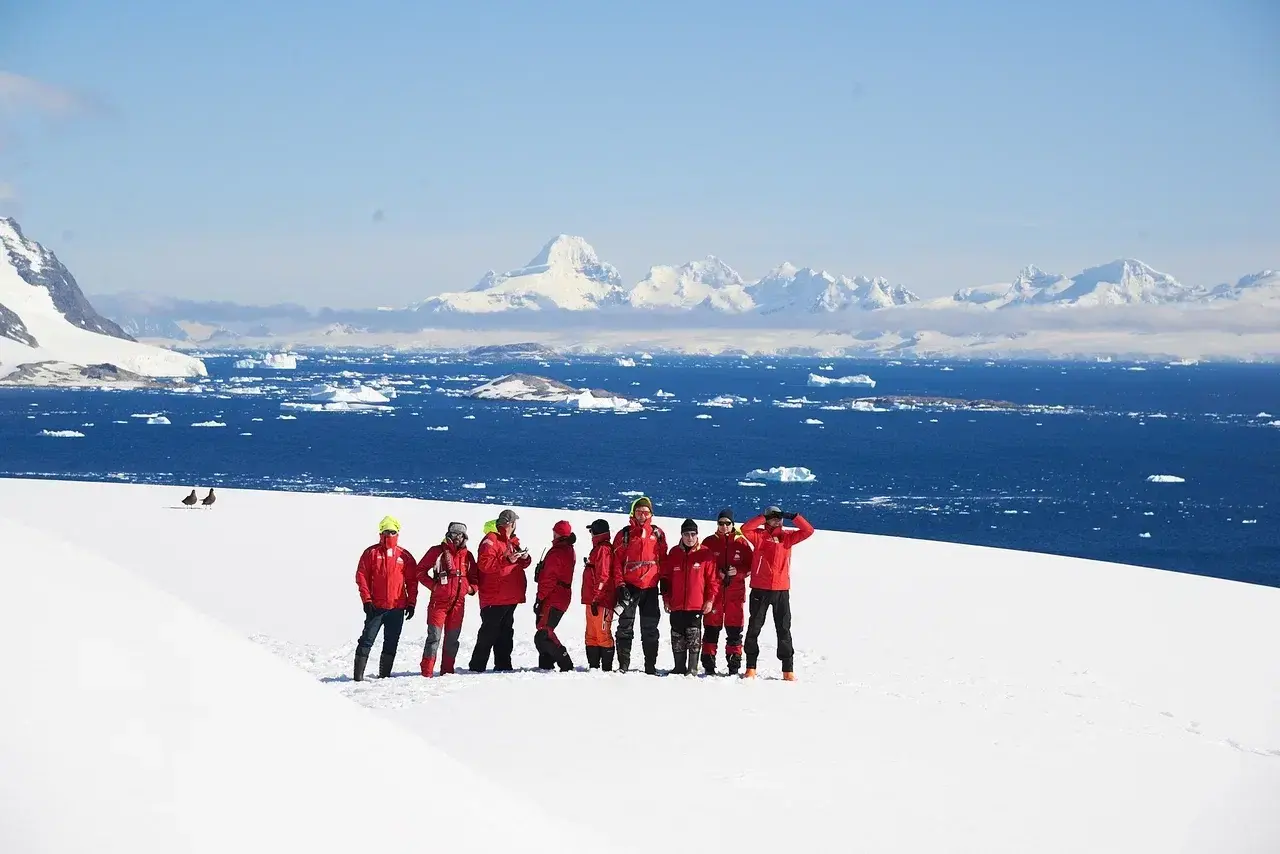
Participants can hike around King George Island and, when conditions allow, travel along the coast by Zodiac.
The experience also involves scientific and environmental activities. Participants may help observe penguins and pinnipeds, monitor wildlife camera traps, document conditions around Bellingshausen Glacier and collect marine debris.
Rather than simply passing through the landscape, you spend time learning how people actually work, move and conduct research in Antarctica.
The Antarctic Science Camp can also be combined with selected MoreTime Expeditions sailing journeys, subject to availability.
How Much Can You See During One Antarctica Trip?
Antarctica is enormous, so a single expedition covers only a tiny part of it.
Most tourist journeys from South America focus on the Antarctic Peninsula and nearby islands rather than attempting to travel across the continent.
Even within this region, the itinerary is flexible.
One day you might sail through iceberg-filled waters, another could involve a Zodiac excursion, and another might be spent navigating toward a different bay or island.
Weather and ice can close one route and make another possible.
This is why it is better to think of an Antarctic itinerary as an expedition plan rather than a fixed sightseeing schedule.
What Is the Best Way to Travel in Antarctica?
There is no single answer.
A conventional expedition cruise works well for travelers who prefer a larger ship and more onboard facilities.
A sailing expedition is better suited to travelers who want a smaller group, closer connection with the ocean and a journey where sailing itself is part of the adventure.
Fly & Sail is useful if you want to avoid crossing the Drake Passage by sea while still exploring Antarctic waters aboard a sailing vessel.
And the Antarctic Science Camp offers something different again: the chance to remain at a polar station, participate in field activities and experience Antarctica from the perspective of the people who live and work there.
For many travelers, the most immersive journey combines different forms of exploration — sailing through Antarctic waters, taking Zodiac excursions and spending time on King George Island.
Explore the sailing, Fly & Sail and Antarctic Science Camp programs with MoreTime Expeditions to choose how you want to travel through Antarctica and experience the polar region beyond a traditional cruise.