Flights to Antarctica: How to Fly to the White Continent
For many travelers, getting to Antarctica brings to mind a long voyage across the Drake Passage. But sailing across one of the world's most famous stretches of ocean is no longer the only way to reach the White Continent.
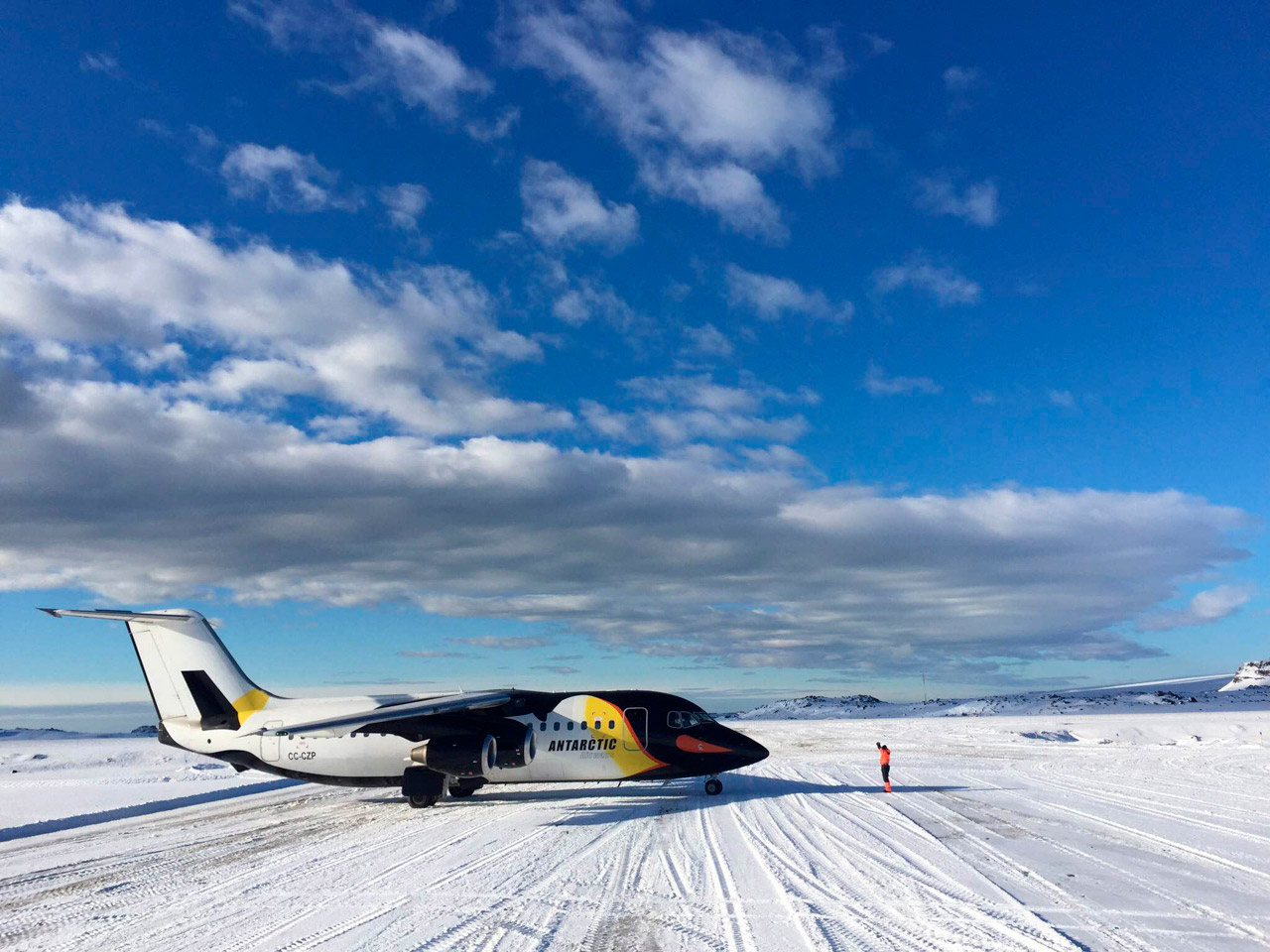
Flights to Antarctica make it possible to cross the Drake Passage by air and arrive at King George Island in just a few hours. From there, travelers can continue their Antarctic expedition aboard a sailing vessel, exploring glaciers, islands, penguin colonies and remote bays by sea.
So, can you really fly to Antarctica? Where do flights depart from? How long does the journey take? And is flying better than taking a traditional Antarctica cruise?
Here is what you need to know before planning your trip.
Can You Fly to Antarctica?
Yes. You can fly to Antarctica.
However, there are no regular commercial flights to Antarctica comparable to flights between major cities. You cannot simply search for a daily scheduled flight from New York, London or Paris to Antarctica and purchase a standard airline ticket.
Passenger flights operate from a limited number of gateways and are closely connected with Antarctic tourism, logistics and scientific operations.
For travelers heading toward the Antarctic Peninsula, one of the most practical routes is:
Punta Arenas, Chile → King George Island, South Shetland Islands
King George Island is located just north of the Antarctic Peninsula and serves as an important gateway to the region. Several research stations operate there, and its airfield allows travelers to cross the Drake Passage by plane rather than ship.
This route also makes it possible to combine a flight with a small-group sailing expedition and explore Antarctica by sea after arrival.
Where Do Flights to Antarctica Leave From?
If you are planning a tourist expedition to the Antarctic Peninsula, Punta Arenas in southern Chile is one of the main departure points for flights to Antarctica.
Most international travelers therefore make the journey in several stages:
Home country → Santiago, Chile → Punta Arenas → King George Island, Antarctica
Punta Arenas sits on the Strait of Magellan in Chilean Patagonia and has long been an important logistical gateway for Antarctic operations.
From here, specialized flights cross the Southern Ocean and the Drake Passage before landing on King George Island.
This is very different from the classic sea route to Antarctica. Many traditional expedition ships depart from Ushuaia, Argentina, and sail across the Drake Passage before reaching the South Shetland Islands and Antarctic Peninsula.
For travelers researching how to go to Antarctica, choosing between flying and crossing the Drake by sea is therefore one of the first decisions to make.
How Long Is the Flight to Antarctica?
The flight from Punta Arenas to King George Island takes approximately two hours, although actual operations depend heavily on Antarctic weather conditions.
The difference becomes particularly noticeable when compared with reaching Antarctica under sail. A sailing crossing of the Drake Passage typically takes several days, depending on the vessel, wind, sea and weather conditions.
Flying therefore allows travelers to spend less of their expedition getting to Antarctica and more time exploring the destination itself.
For people with limited vacation time, this can make a Fly & Sail Antarctica expedition particularly attractive.
Where Do You Land in Antarctica?
Flights from Punta Arenas generally arrive on King George Island, the largest of the South Shetland Islands.
The island is one of Antarctica's major scientific hubs and is home to research facilities operated by several countries.
For expedition travelers, however, King George Island is primarily the beginning of the Antarctic adventure rather than the final destination.
After landing, travelers can board an expedition vessel and continue south toward the Antarctic Peninsula.
From this point onward, the experience becomes a genuine Antarctica sailing expedition: navigating between islands, approaching glaciers and icebergs, making landings and observing Antarctic wildlife.
This combination is what makes the fly-and-sail format different from both a sightseeing flight and a conventional large-ship Antarctica cruise.
Can You Fly Directly From the USA or Europe to Antarctica?
Not as a normal commercial passenger route.
Travelers from the United States or Europe first need to reach South America.
For the Punta Arenas route, that normally means flying internationally to Chile and then taking a domestic connection south to Patagonia.
If you are searching for flights to Antarctica from the USA, the practical itinerary may look something like this:
USA → Santiago → Punta Arenas → King George Island
From Europe, the journey follows a similar pattern:
Europe → Santiago → Punta Arenas → King George Island
The exact international routing depends on your departure city and available airline connections.
It is worth leaving additional time in your itinerary before and after the Antarctic portion of the journey. Weather in Antarctica can change rapidly, and flights may be delayed until conditions are suitable for safe operation.
What Happens After You Fly to Antarctica?
This depends entirely on the type of Antarctica tour you choose.
A flight can bring you to King George Island, but reaching Antarctica is only part of the experience.
One option is a Fly & Sail expedition, which combines air travel across the Drake Passage with exploration aboard a small sailing vessel.
With MoreTime Expeditions, participants fly to King George Island and then continue their journey aboard a sailing ship, exploring the Antarctic Peninsula and surrounding islands.
Depending on weather, ice conditions and the itinerary, the journey may include remote bays, glaciers, iceberg-filled channels, research stations, penguin colonies and areas frequented by whales and seals.
Fly to Antarctica or Cross the Drake Passage?
There is no universally better option. They are two very different ways to begin an Antarctica expedition.
Flying the Drake Passage
Flying is ideal for travelers who want to maximize their time in Antarctica or avoid several days of open-ocean sailing.
The main advantages are simple: the crossing takes hours rather than days, there is no prolonged exposure to rough seas during the Drake crossing, and more of the itinerary can be dedicated to Antarctica itself.
For travelers with limited vacation time, a fly-cruise or Fly & Sail Antarctica expedition can be particularly attractive.
Sailing the Drake Passage
Crossing the Drake under sail is a completely different experience.
Instead of treating the ocean as something to bypass, the crossing becomes part of the expedition.
You watch the coast of South America disappear, enter the Southern Ocean and gradually approach Antarctica by sea.
For travelers drawn to sailing, ocean crossings and maritime adventure, the Drake Passage can become one of the highlights of the entire journey.
There Is Also a Third Option: Sail One Way and Fly the Other
You don't necessarily have to choose between flying and sailing.
Some Antarctic expeditions combine the two.
Selected MoreTime Expeditions voyages cross the Drake Passage aboard a sailing vessel in one direction and use a flight between King George Island and Punta Arenas for the other leg.
It is an interesting compromise for travelers who want to experience the legendary Drake Passage without committing to two open-ocean crossings.
You still get the experience of approaching or leaving Antarctica under sail while saving several days by flying the other leg.
Is Flying to Antarctica Safe?
Antarctic aviation operates in an environment where weather has the final word.
Flights are highly dependent on visibility, wind and runway conditions. Delays are possible, and travelers should build flexibility into their international travel plans.
Flights may be postponed when weather does not permit safe operation. This is a normal part of traveling in a remote polar environment.
For this reason, it is sensible to avoid booking tightly timed onward flights immediately after the scheduled return from Antarctica.
When planning travel to Antarctica, flexibility is not merely convenient — it is part of the expedition.
When Can You Fly to Antarctica?
Tourism to the Antarctic Peninsula is concentrated during the austral summer, generally from October through March.
During these months, temperatures are relatively milder, daylight hours are long and sea-ice conditions make coastal exploration more practical.
Different parts of the season can offer very different experiences.
Early summer brings extensive snow and dramatic ice landscapes. Mid-season offers long daylight hours and intense activity around penguin colonies. Later in the season can be particularly interesting for whale watching.
The best time for an Antarctica trip therefore depends on what you most want to see rather than simply on finding the warmest month.
What Is the Best Way to Travel Around Antarctica After Landing?
There are no roads connecting the destinations most travelers want to see on the Antarctic Peninsula.
Once you arrive, exploration is primarily by sea.
Large expedition ships offer one approach, but sailing vessels provide a very different scale of experience.
A small-group sailing expedition to Antarctica allows travelers to experience the landscape from much closer to sea level and spend the journey as part of a small expedition team rather than among hundreds of passengers.
For travelers who want something closer to an expedition than a conventional cruise vacation, combining a flight with a sailing vessel can offer the best of both worlds: fast access to Antarctica followed by slower, more immersive exploration.
Fly & Sail Antarctica With MoreTime Expeditions
The MoreTime Expeditions Fly & Sail program is designed for travelers who want to skip the long Drake Passage crossing without giving up the experience of exploring Antarctica under sail.
The journey begins in Punta Arenas, Chile. Participants fly across the Drake Passage to King George Island, where the sailing expedition begins.
From there, the route continues through the Antarctic islands and along the Peninsula, with opportunities to encounter glaciers, enormous icebergs, research stations, penguin colonies and, when nature cooperates, whales.
Instead of experiencing Antarctica from a large cruise ship, guests live aboard a sailing vessel and explore the region in a small group with an experienced crew.
For travelers who still want to experience the Drake Passage under sail, other itineraries combine one sailing crossing with one flight, while full sailing expeditions make the ocean crossing part of the adventure itself.
So, What Is the Easiest Way to Get to Antarctica?
For travelers heading to the Antarctic Peninsula, flying from Punta Arenas to King George Island is one of the fastest ways to reach Antarctica.
Instead of spending several days crossing the Drake Passage by sea, you can fly over it in around two hours and begin exploring the polar region shortly after arrival.
But getting there quickly does not mean the expedition itself has to feel rushed.
By combining flights to Antarctica with a small-group sailing expedition, you can skip the longest open-ocean crossing while still experiencing Antarctica from the water — among icebergs, glaciers, wildlife and remote islands far beyond ordinary travel routes.
Want to find the right way to reach Antarctica? Contact MoreTime Expeditions to compare Fly & Sail voyages, one-way Drake Passage crossings and full sailing expeditions, check available dates and cabins, and choose the Antarctic journey that fits you best.