Drake Shake or Drake Lake? Understanding Drake Passage Weather
For anyone planning an expedition to Antarctica, one question comes up again and again:
Will I get a Drake Lake or a Drake Shake?
The Drake Passage has earned a legendary reputation as one of the roughest stretches of ocean on Earth. Yet thousands of travelers cross it every Antarctic season, and no two crossings are ever the same.
Some experience calm seas that look almost like glass. Others encounter powerful swells that make the voyage feel like a true ocean adventure.
So why is the Drake Passage sometimes calm and sometimes wild? And can you predict what conditions you'll get?
Let's take a closer look.
Why Is the Drake Passage So Famous?
The Drake Passage separates South America from Antarctica, connecting the Atlantic, Pacific, and Southern Oceans.
Unlike almost every other ocean route on Earth, there are no continents to interrupt the flow of water around Antarctica. The powerful Antarctic Circumpolar Current circles the continent freely, moving enormous volumes of water around the globe.
At the same time, strong westerly winds—known as the Roaring Forties, Furious Fifties, and Screaming Sixties—sweep across the Southern Ocean.
When these winds, currents, and weather systems combine, they can create large waves and rapidly changing sea conditions.
This is why the Drake Passage has become one of the world's most legendary crossings.
What Is a Drake Lake?
Sometimes the Southern Ocean surprises everyone.
Instead of towering waves, travelers are greeted by calm seas, gentle swells, sunshine, and incredible wildlife.
This is known as a Drake Lake.
On these crossings, passengers often spend hours on deck watching albatrosses glide effortlessly above the waves while whales occasionally surface nearby. The smooth conditions also make it easier to photograph seabirds and enjoy life aboard the yacht.
Although no crossing is ever completely flat, Drake Lake conditions are generally comfortable, even for travelers who are concerned about seasickness.
What Is a Drake Shake?
The opposite is the famous Drake Shake.
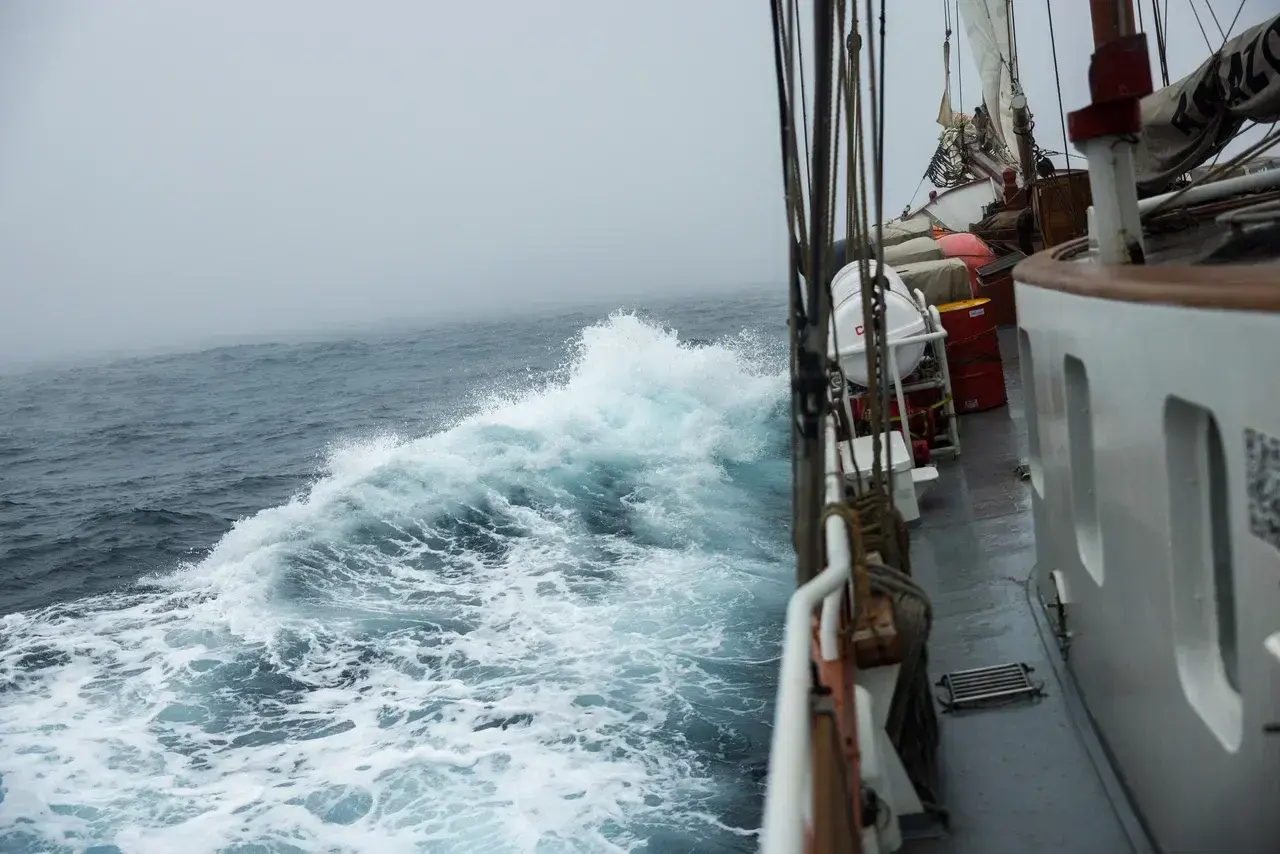
Strong winds and low-pressure systems generate larger waves and more energetic seas. The yacht rises and falls with the swell, reminding everyone that they are crossing one of the most powerful oceans on Earth.
For many expedition travelers, this isn't something to fear—it's part of the adventure.
Crossing the Drake in rough conditions offers a rare opportunity to experience genuine offshore sailing and appreciate the skill of the captain and crew.
Many sailors even consider it a rite of passage.
Can You Predict Which One You'll Get?
Unfortunately, no.
Modern weather forecasts are excellent only a few days in advance, and conditions in the Southern Ocean can change quickly.
A voyage may begin with calm weather and become rough overnight—or the opposite.
Even two ships leaving a day apart can experience completely different crossings.
Ultimately, every Drake Passage crossing is unique.
What Is the Weather Like During the Antarctic Season?
The Antarctic expedition season runs from November through March.
While temperatures remain relatively stable, weather systems move continuously across the Southern Ocean.
Generally speaking:
- November often brings colder temperatures and spectacular sea ice.
- December and January offer long daylight hours and active penguin colonies.
- February and March are among the best months for whale watching, while sea ice reaches its seasonal minimum.
Drake Passage conditions, however, can vary throughout the entire season. There is no month that guarantees calm water.
Sailing Yacht vs. Cruise Ship in Rough Weather
Large cruise ships and small sailing yachts offer very different experiences.
Cruise ships are heavier and generally move less in moderate seas. They also provide more indoor spaces where passengers can relax.
A sailing yacht, on the other hand, allows you to feel the ocean much more directly.
You'll notice every wave, hear the wind in the rigging, and experience the rhythm of offshore sailing. For travelers seeking an authentic expedition rather than simply transportation to Antarctica, this is often one of the highlights of the journey.
At MoreTime Expeditions, guests sail with an experienced professional crew that has extensive knowledge of the Southern Ocean and Antarctic navigation. Every decision—from route planning to sail handling—is made with safety as the highest priority.
Should You Be Worried About the Drake Passage?
For most travelers, the answer is no.
Some people experience mild seasickness, while others feel perfectly comfortable. Modern motion sickness medication, staying hydrated, and spending time on deck looking at the horizon can make a significant difference.
More importantly, the Drake Passage is only a small part of the expedition.
On the other side lies Antarctica—glaciers, whales, penguin colonies, towering mountains, and landscapes unlike anywhere else on Earth.
Why Many Sailors Say the Drake Is Part of the Adventure
Among sailors, there is a saying:
"If you haven't crossed the Drake, you haven't truly sailed to Antarctica."
Whether you experience a calm Drake Lake or an unforgettable Drake Shake, the crossing becomes part of your story.
It's the gateway to the White Continent and one of the last great ocean passages that still gives travelers a genuine sense of exploration.
Cross the Drake with MoreTime Expeditions
At MoreTime Expeditions, we believe the journey is just as important as the destination.
Our small-group sailing expeditions let you experience the Drake Passage the way generations of polar explorers did—under sail, with an experienced crew, and surrounded by the immense beauty of the Southern Ocean.
Whether the ocean welcomes you with a peaceful Drake Lake or challenges you with a memorable Drake Shake, crossing the Drake is an adventure you'll never forget.
Don't Want to Cross the Drake Passage? You Don't Have To.
While many travelers dream of crossing the legendary Drake Passage, it's not the only way to reach Antarctica.
At MoreTime Expeditions, we've made the White Continent accessible to almost everyone through our Fly & Sail expeditions.
Instead of spending two days at sea each way, you'll board a charter flight in southern Chile and fly directly across the Drake Passage to King George Island. Just a few hours later, you'll already be standing in Antarctica, where your expedition continues aboard one of our small sailing yachts.
You still get the authentic experience of exploring Antarctica from the deck of a traditional expedition vessel—cruising among glaciers and icebergs, landing on remote shores, watching whales and penguins, and discovering places that large cruise ships cannot reach.
The only difference is that you skip the roughest stretch of the Southern Ocean.
Fly & Sail is an excellent choice for families traveling with children, guests who are concerned about seasickness, or anyone who simply wants to spend more time exploring Antarctica instead of crossing the Drake Passage.
Whatever your dream Antarctic adventure looks like, MoreTime Expeditions offers a way to make it happen. Whether you want to conquer the legendary Drake Passage under sail or fly directly to the White Continent and begin your expedition there, we'll help you choose the journey that's right for you.