Zero-Waste Travel in Antarctica: What It Actually Means
Antarctica is one of the last truly wild places on Earth. Unlike most travel destinations, its ecosystems are incredibly fragile, wildlife has evolved with very little human disturbance, and even small environmental impacts can have long-lasting consequences.
That's why sustainability in Antarctica isn't just about recycling or using reusable water bottles. It starts with how you travel.
The type of vessel you choose, the size of your group, your behavior on shore, and the way your operator manages waste all determine the environmental footprint of your expedition.
At MoreTime Expeditions, protecting Antarctica isn't a marketing slogan—it's part of every voyage we organize.
Why Cruise Ships Have a Larger Environmental Impact
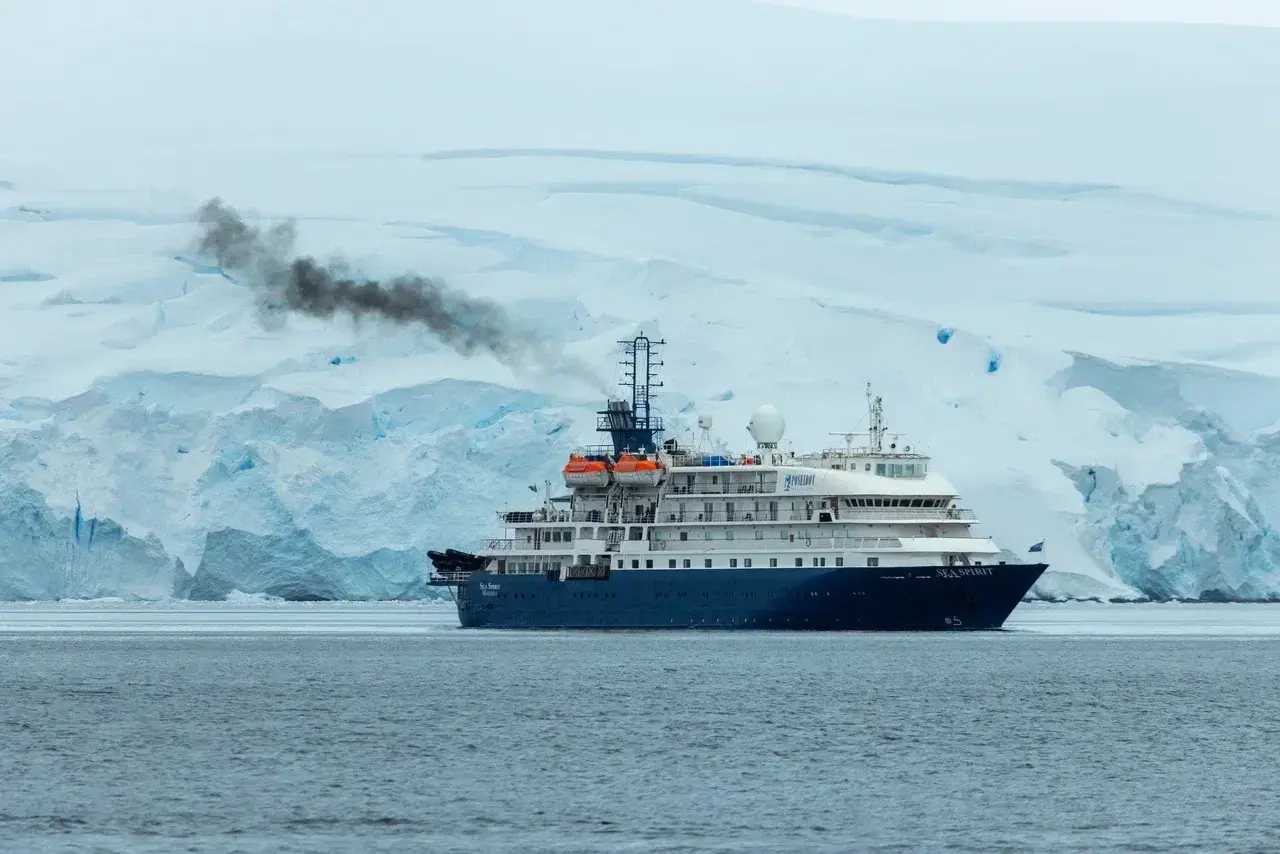
Large expedition cruise ships have made Antarctica more accessible than ever, but they also come with a significant environmental footprint.
Most Antarctic cruise vessels carry hundreds of passengers and rely entirely on powerful diesel engines. These ships consume large amounts of fuel, generate constant underwater noise, and produce considerably more emissions than small sailing vessels.
Noise pollution is becoming one of the biggest environmental concerns in polar waters.
Whales, seals, and many other marine species rely on sound to communicate, navigate, locate food, and care for their young. Continuous ship noise can interfere with these natural behaviors and alter migration routes.
Large ships also require more infrastructure, more fuel logistics, and larger landing operations, increasing the overall human impact on Antarctica.
While expedition cruising is carefully regulated under IAATO guidelines, vessel size still plays an important role in environmental impact.
Why Sailing Expeditions Are Different
A sailing expedition follows a very different philosophy.
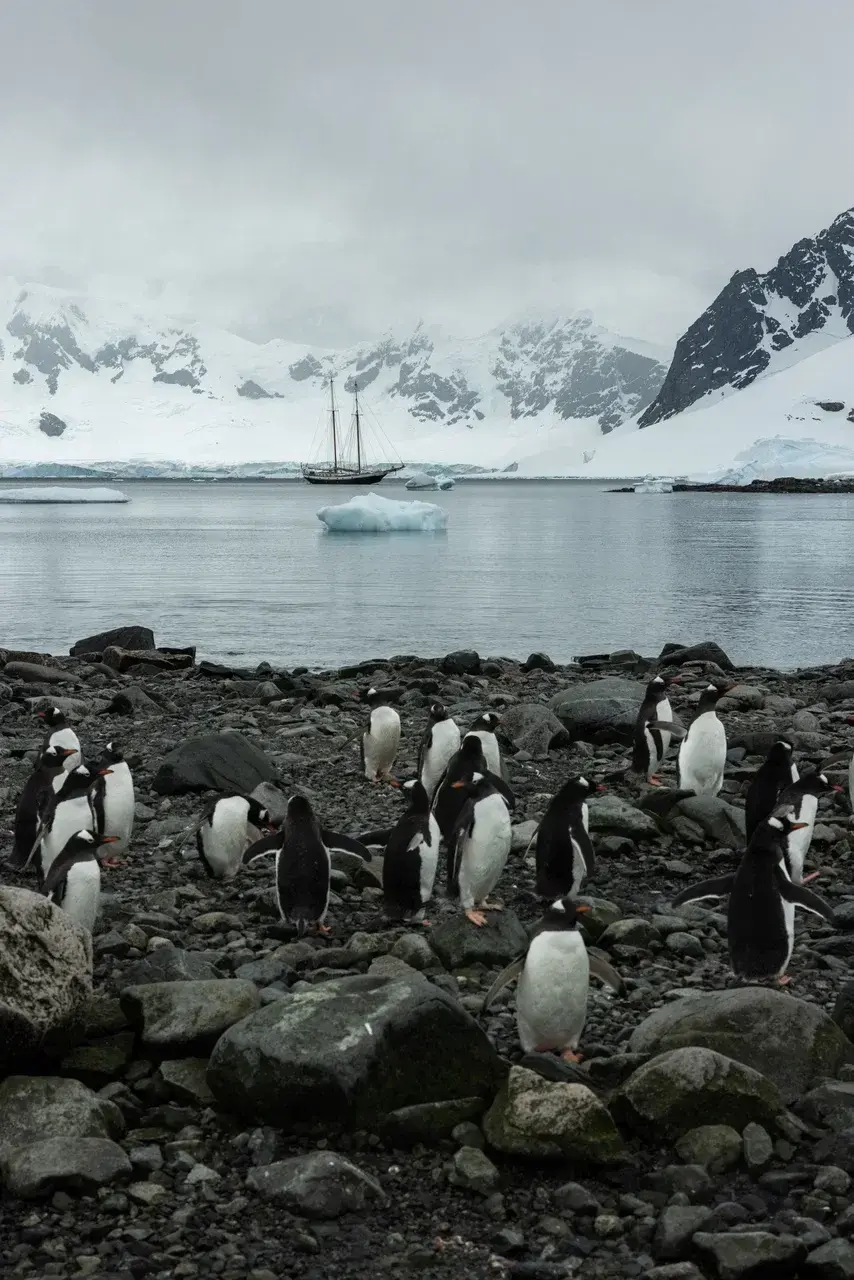
Whenever weather conditions allow, our schooners travel under sail, dramatically reducing engine use, fuel consumption, emissions, and underwater noise.
Instead of becoming another source of disturbance, the yacht moves quietly through Antarctica's spectacular landscapes.
The experience feels very different as well.
You hear glaciers cracking in the distance. You hear whales exhale beside the boat. You hear seabirds instead of engine noise.
For many guests, this silence becomes one of the most unforgettable parts of the expedition.
Small yachts also carry far fewer passengers, resulting in smaller landing groups, less pressure on wildlife sites, and greater flexibility to choose less-visited locations.
Monitoring Noise Pollution in Antarctica
Protecting Antarctica requires more than simply reducing our own impact.
MoreTime Expeditions actively contributes to environmental monitoring by collecting data related to underwater and environmental noise during our expeditions.
Our team records observations, analyzes noise conditions in different areas, and contributes valuable information that supports ongoing research into the effects of human activity on Antarctic ecosystems.
Because understanding environmental change is the first step toward protecting one of the planet's most sensitive regions.
Leave No Trace at the Antarctic Science Camp
Sustainability doesn't stop once we reach land.
Our unique Antarctic Science Camp, located near Bellingshausen Station, follows a strict Leave No Trace philosophy.
Everything that arrives at the camp eventually leaves with us.
All waste generated during camp operations is carefully sorted, collected, and transported out of Antarctica for proper disposal. Nothing is abandoned, buried, or left behind.
This approach ensures that the camp operates with the smallest possible environmental footprint while allowing guests to experience life on the White Continent.
Living in Antarctica also teaches an important lesson: in one of the most remote places on Earth, every resource matters, and every piece of waste has to be managed responsibly.
Small Groups Mean Smaller Impact
Another important advantage of sailing expeditions is group size.
Instead of traveling with hundreds of passengers, our expeditions typically involve only a small number of guests.
This means:
- Less disturbance to wildlife.
- Smaller landing parties.
- Greater flexibility to avoid crowded sites.
- More time observing nature quietly.
- A more respectful interaction with Antarctica.
Instead of rushing from one attraction to another, guests spend more time understanding the places they visit and the importance of protecting them.
Responsible Exploration Is the Future of Antarctic Travel
No expedition to Antarctica is completely impact-free.
Every journey requires transportation, logistics, and careful planning.
The goal isn't to pretend travel has no footprint—it is to make that footprint as small as possible while helping people develop a deeper appreciation for one of Earth's last great wildernesses.
Choosing a small sailing expedition, supporting scientific monitoring, minimizing noise pollution, and operating under strict Leave No Trace principles are all part of that responsibility.
Explore Antarctica Responsibly with MoreTime Expeditions
At MoreTime Expeditions, we believe that exploring Antarctica also means helping to protect it.
Our sailing expeditions reduce engine use whenever possible, our Antarctic Science Camp removes all waste from the continent, and our team actively contributes to monitoring environmental conditions, including noise pollution around Antarctica.
Whether you choose to sail across the Drake Passage, spend a week at our Antarctic Science Camp, or charter a private yacht, you'll be traveling with a company committed to keeping Antarctica as wild and untouched as possible—for future explorers, scientists, and the wildlife that calls it home.