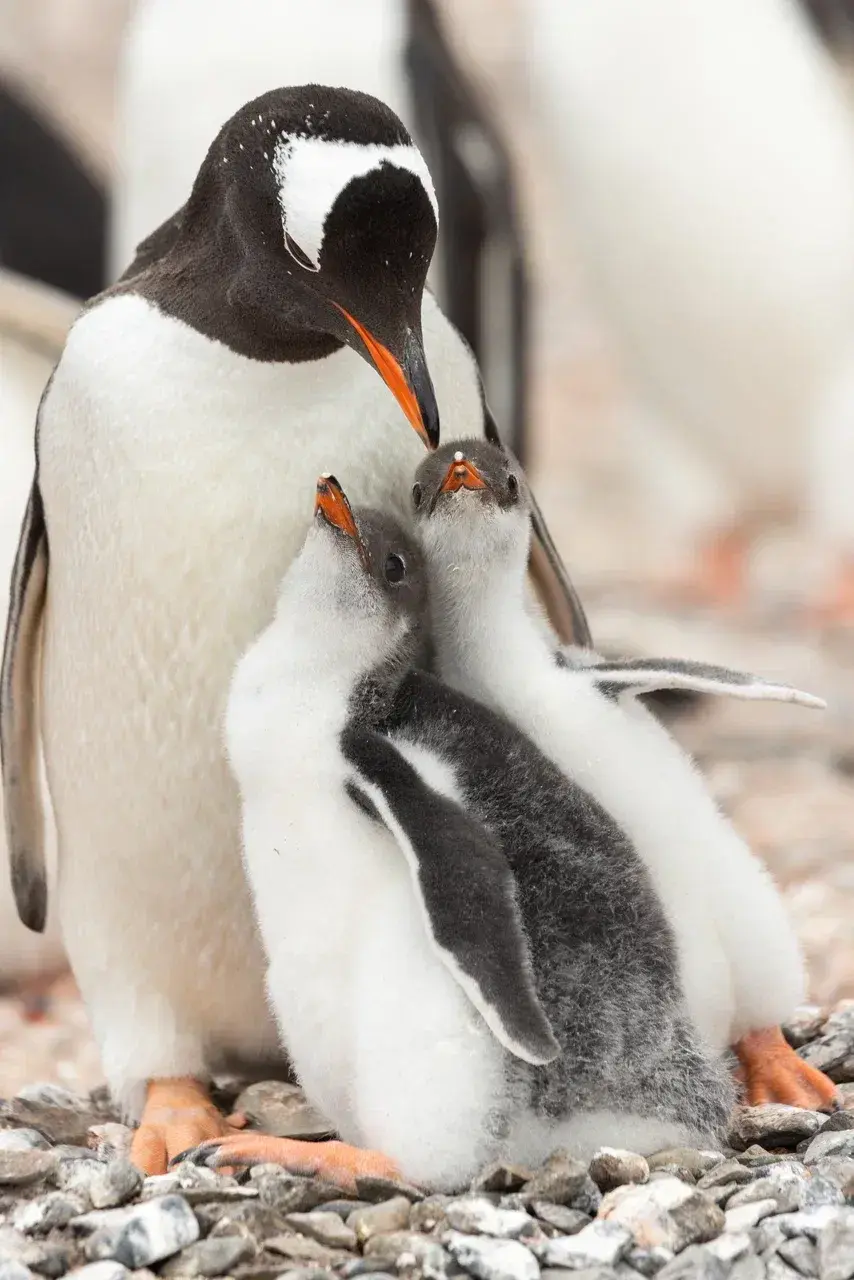
Penguins of the Antarctic Peninsula: Where to See Gentoo, Adélie and Chinstrap Colonies
Few wildlife encounters are as memorable as standing quietly beside a colony of thousands of penguins in Antarctica. Their curiosity, constant activity, and surprisingly expressive personalities make them one of the greatest highlights of any expedition.
The Antarctic Peninsula is home to several penguin species, but visitors are most likely to encounter Gentoo, Adélie, and Chinstrap penguins. Each species has its own appearance, behavior, and preferred habitat, making every landing a unique experience.
Whether you arrive aboard a MoreTime Expeditions sailing yacht or spend a week at the Antarctic Science Camp, you'll have the opportunity to observe these remarkable birds in their natural environment while following responsible wildlife viewing practices.
Why Are Penguins So Closely Associated with Antarctica?
Penguins have evolved to thrive in one of the harshest environments on Earth.
Instead of flying, they have developed streamlined bodies and powerful flippers that make them exceptional swimmers. Their dense feathers and thick layer of fat provide insulation against freezing temperatures, while their social behavior helps them survive the Antarctic climate.
Although several penguin species live in the Southern Hemisphere, only a few breed on the Antarctic Peninsula and nearby islands.
Gentoo Penguins
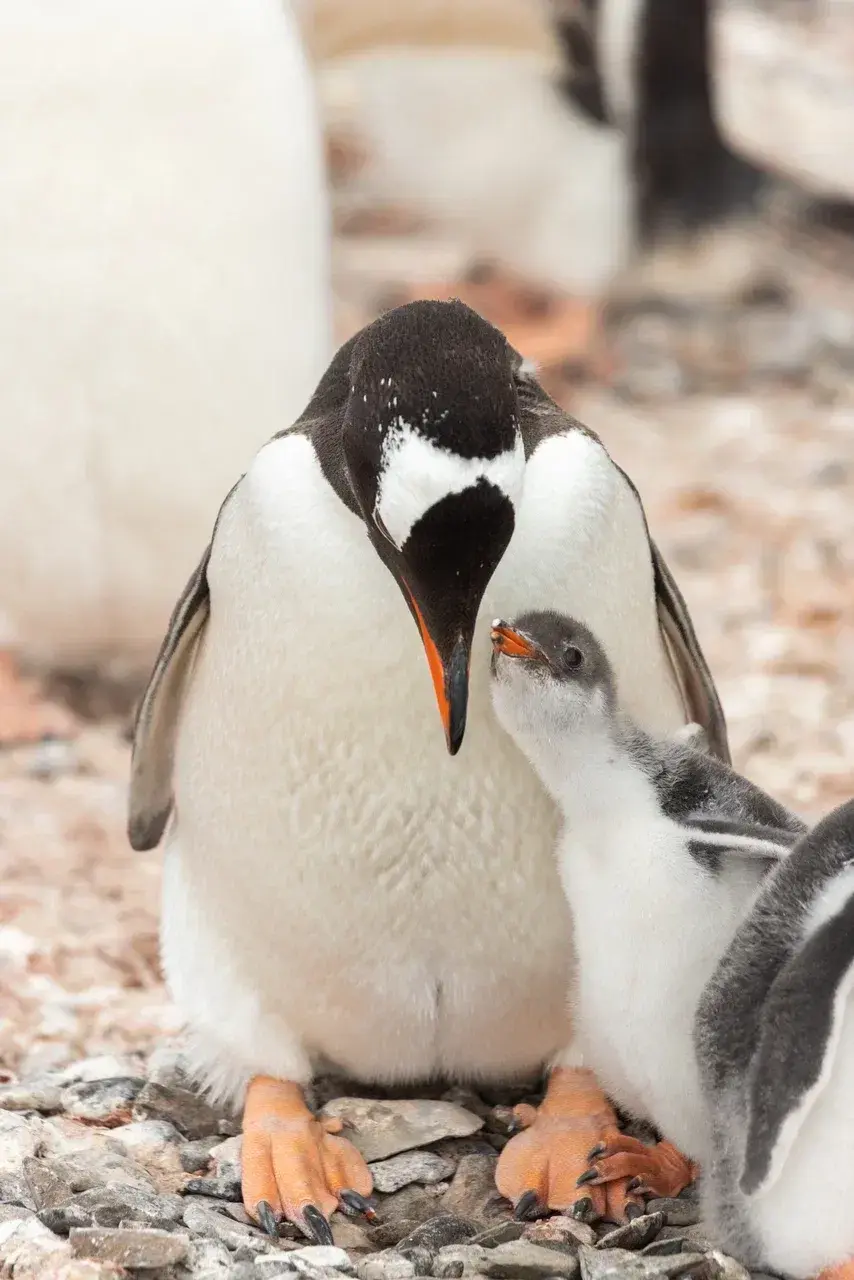
Gentoo penguins are among the most commonly seen species during Antarctic expeditions.
They are easily recognized by the bright white stripe running across the top of their heads and their vivid orange beaks.
Characteristics
- Height: approximately 75–90 cm
- Weight: 5–8.5 kg
- Distinctive white head stripe
- Bright orange bill
- Fastest swimming penguin species, reaching speeds of up to 35 km/h
Gentoo penguins often appear curious about visitors and frequently approach expedition groups while continuing their daily routines.
Their colonies are usually noisy and full of activity as adults build nests, care for eggs, or feed their chicks.
Adélie Penguins
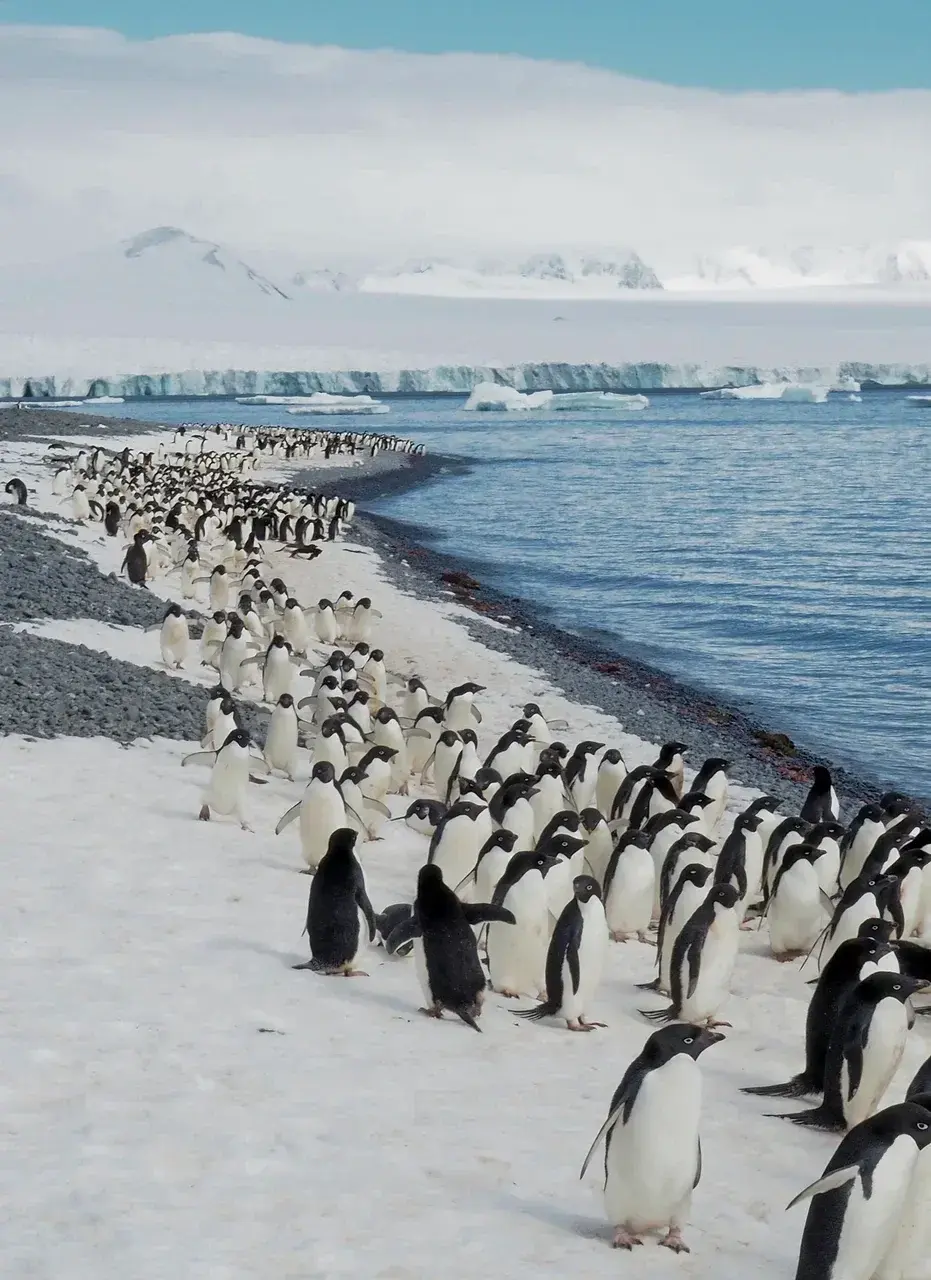
Adélie penguins are considered one of Antarctica's classic penguin species.
They are slightly smaller than Gentoo penguins and have distinctive white rings around their eyes.
Characteristics
- Height: approximately 45–70 cm
- Weight: 3–6 kg
- Black head with white eye ring
- Short black beak
- Extremely energetic and social
Adélies spend much of their lives on sea ice and are especially well adapted to colder environments.
Their colonies can number tens of thousands of birds, creating an unforgettable wildlife spectacle.
Chinstrap Penguins
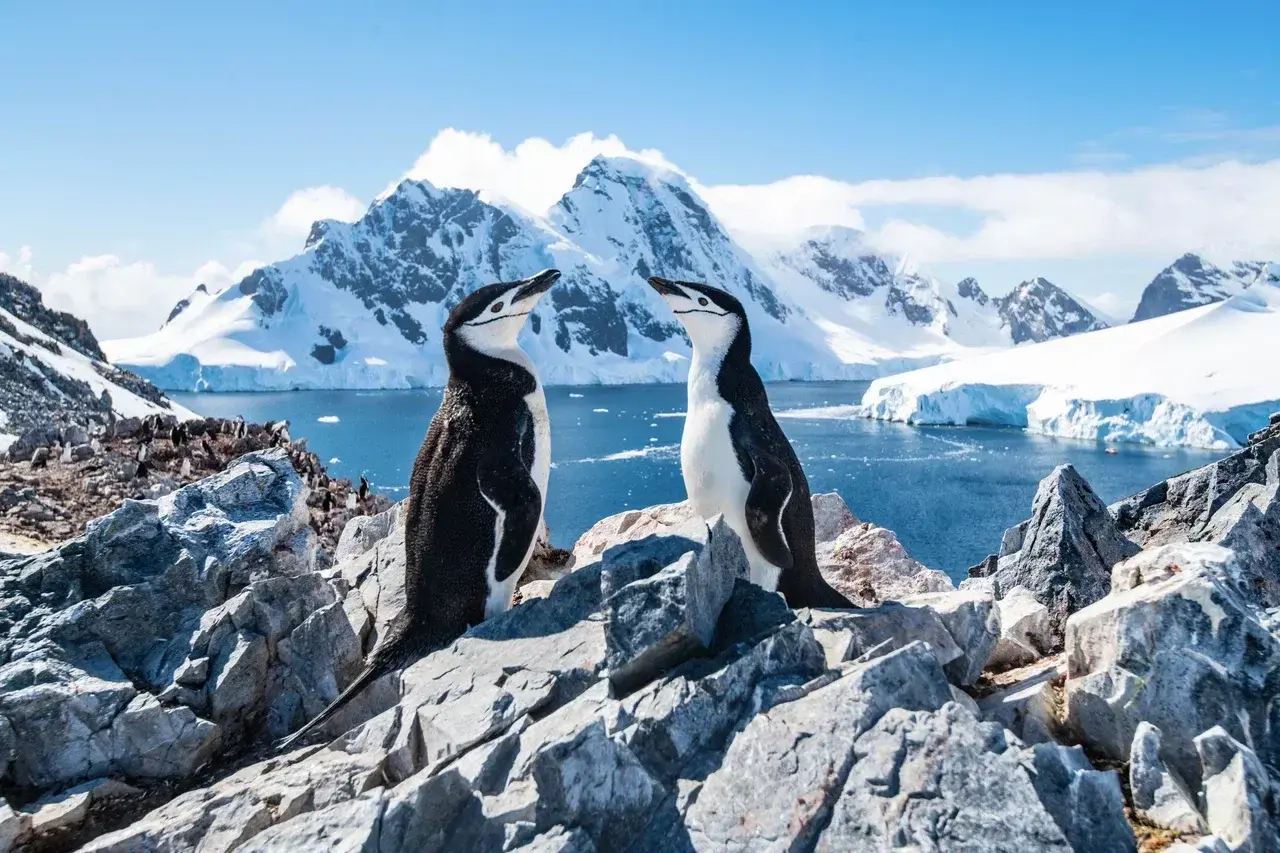
Chinstrap penguins are named after the narrow black line running beneath their heads, resembling a helmet strap.
They are energetic climbers and are often found nesting on steep rocky slopes.
Characteristics
- Height: 68–76 cm
- Weight: 3–5 kg
- Thin black line beneath the chin
- Excellent climbers
- Highly vocal breeding colonies
Their dramatic colonies are among the most photogenic wildlife locations on the Antarctic Peninsula.
Where Can You See Penguin Colonies?
The Antarctic Peninsula and the South Shetland Islands contain numerous breeding colonies.
Some of the best-known areas include:
Cuverville Island
One of Antarctica's largest Gentoo penguin colonies.
Visitors often observe adults carrying stones for nest building while chicks gather in groups waiting to be fed.
Half Moon Island
Known for its Chinstrap penguins, Half Moon Island combines dramatic scenery with excellent wildlife viewing.
Gentoo penguins and seals are also frequently seen here.
Brown Bluff
Located on the Antarctic Peninsula, Brown Bluff is famous for its large Adélie penguin colony.
Towering volcanic cliffs create one of Antarctica's most spectacular landing sites.
Danco Island
A favorite stop on many sailing expeditions, Danco Island offers excellent opportunities to observe Gentoo penguins alongside breathtaking glacier views.
King George Island
King George Island is home to several Gentoo penguin colonies and can also provide opportunities to see Chinstrap penguins depending on the location and season.
Guests staying at the Antarctic Science Camp often encounter penguins during guided hikes around the island.
Penguin Life Throughout the Season
Penguin behavior changes dramatically as the Antarctic summer progresses.
November
Adults return to breeding sites and begin building nests using carefully collected stones.
Courtship displays become common as breeding pairs reunite.
December
Most colonies contain eggs, and parents take turns incubating them while the other searches for food at sea.
January
Chicks begin hatching.
Colonies become especially lively as thousands of hungry chicks wait for returning adults.
February
Growing chicks gather into groups known as crèches while adults continue feeding them.
Molting also begins for some penguins later in the season.
March
Many young penguins prepare to leave the colonies and spend more time at sea.
Wildlife activity gradually decreases as winter approaches.
Watching Penguins Responsibly
Penguins are wild animals, and protecting their natural behavior is essential.
All MoreTime Expeditions follow IAATO visitor guidelines designed to minimize human impact.
Visitors should:
- Keep a respectful distance.
- Never touch or feed wildlife.
- Avoid blocking penguin "highways" between colonies and the ocean.
- Remain quiet and move slowly.
- Follow the instructions of expedition guides.
- Allow penguins to approach if they choose.
The goal is to observe without influencing natural behavior.
Photographing Penguin Colonies
Penguins are among Antarctica's most rewarding wildlife subjects.
For better photographs:
- Use a telephoto lens for close portraits.
- Include glaciers or mountains to show scale.
- Photograph at eye level whenever possible.
- Capture natural behavior rather than posed images.
- Shoot during early morning or evening when light is softer.
- Be patient—interesting moments happen constantly.
Responsible photography always comes before getting the perfect shot.
Penguins and Antarctica's Changing Environment
Penguins are considered important indicators of ecosystem health.
Changes in sea ice, ocean temperatures, and food availability can all influence breeding success and population size.
Scientists continue monitoring penguin colonies throughout Antarctica to better understand how environmental changes affect marine ecosystems.
This long-term research helps improve conservation efforts across the Southern Ocean.
See Penguins During a Small-Group Sailing Expedition
One of the advantages of traveling aboard a small expedition yacht is the ability to spend more time quietly observing wildlife.
Without large crowds, guests can enjoy a more intimate experience with penguin colonies while learning about their behavior from experienced expedition guides.
Every landing is different, and wildlife encounters are never scripted.
Some days you may watch penguins collecting stones for nests, while on others you may witness curious chicks exploring the shoreline or adults porpoising through crystal-clear Antarctic waters.
Experience Antarctica's Penguin Colonies with MoreTime Expeditions
Watching thousands of penguins go about their daily lives is an experience few people ever forget.
Whether you're photographing a bustling Gentoo colony, observing Adélie penguins against towering glaciers, or listening to the calls of Chinstrap penguins echo across a rocky beach, these encounters reveal Antarctica at its most vibrant.
With MoreTime Expeditions, you'll explore penguin habitats aboard a small-group sailing yacht or from the Antarctic Science Camp, giving you the time and space to experience Antarctica's extraordinary wildlife responsibly and up close.