Antarctica Trip: How to Choose the Right Polar Adventure
An Antarctica trip is unlike almost any other journey. There are no cities to travel between and no fixed sightseeing route. Instead, your days are shaped by glaciers, icebergs, wildlife, weather and the conditions of the Southern Ocean.
Most travelers explore the Antarctic Peninsula and South Shetland Islands, reaching the region from southern Argentina or Chile.
But there is more than one way to organize an Antarctica trip. You can cross the Drake Passage under sail, fly to Antarctica and join a sailing vessel there, or combine sailing and flying in the same expedition.
MoreTime Expeditions offers these options in small groups for travelers looking for an alternative to a traditional Antarctica cruise.
Where Does an Antarctica Trip Start?
Two of the main gateways to the Antarctic Peninsula are Ushuaia in Argentina and Punta Arenas in Chile.
Ushuaia is the starting point for sailing expeditions across the Drake Passage. From here, vessels travel south through the Southern Ocean toward the South Shetland Islands and Antarctic Peninsula.
Punta Arenas is used for Fly & Sail trips. Travelers fly to King George Island and board their sailing vessel after arriving in Antarctica.
If you are traveling from the USA or Europe, you will therefore need to reach South America before the Antarctic part of your journey begins.
Option 1: A Full Sailing Expedition
For travelers who want the journey to Antarctica to be part of the adventure, crossing the Drake Passage under sail offers the most complete maritime experience.
The expedition begins in Ushuaia and continues south across one of the world's most famous ocean passages.
Once in Antarctic waters, the sailing vessel explores primarily around the Antarctic Peninsula and surrounding islands. At the end of the journey, you cross the Drake again and return to South America.
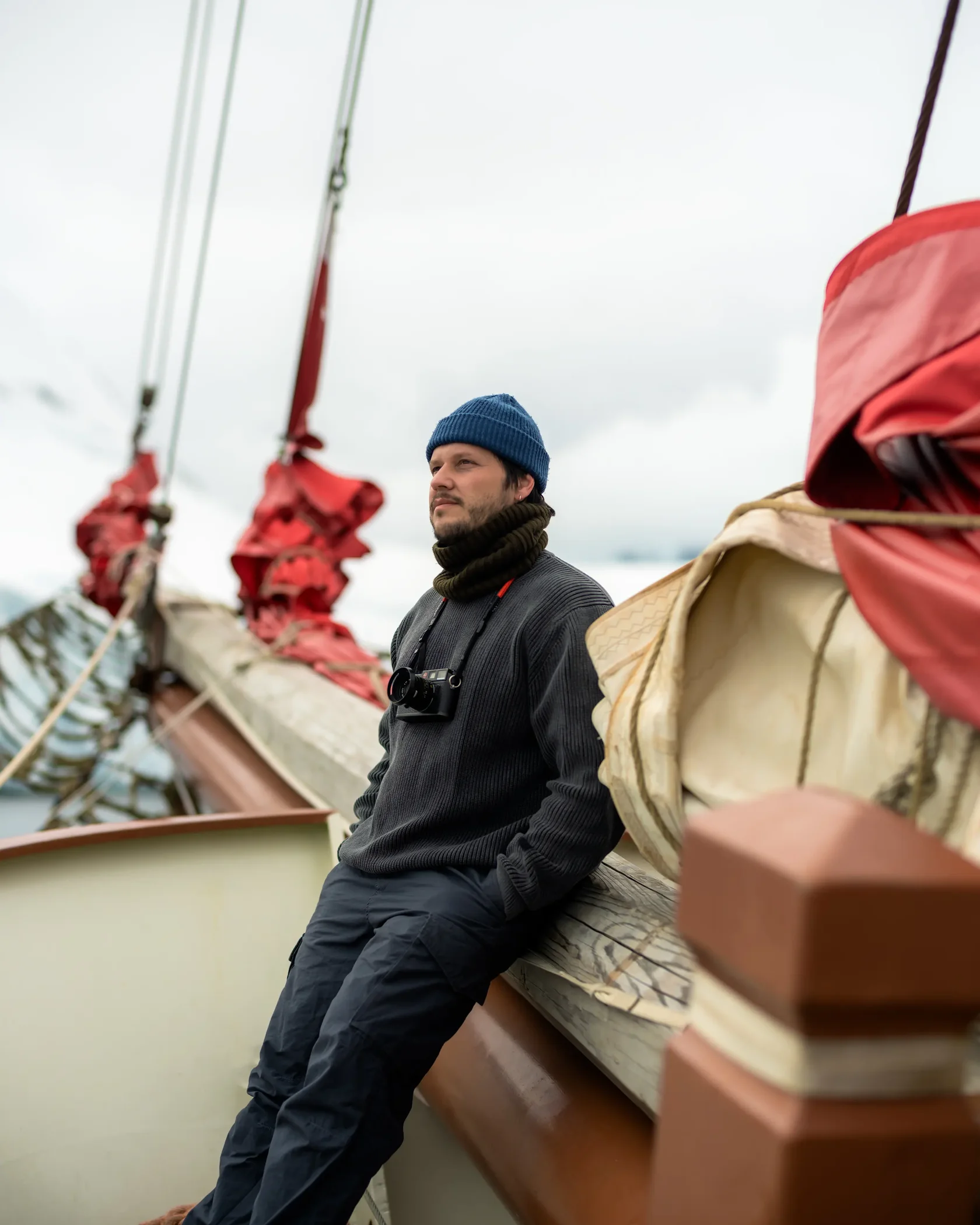
This is very different from simply boarding a large Antarctica cruise ship. You travel with a small group, live aboard the yacht and experience the Southern Ocean as an active part of the expedition.
No previous sailing experience is required.
Option 2: Fly & Sail Antarctica
If you would rather avoid the long Drake Passage crossing, you can fly from Punta Arenas to King George Island.
After landing, you board the sailing vessel and begin exploring the Antarctic Peninsula region by sea.
The flight is used to cross the Drake Passage. You do not travel between Antarctic destinations by airplane.
A MoreTime Expeditions Fly & Sail journey is particularly suitable for travelers with limited time or those who prefer to avoid several days of open-ocean sailing.
You still get the experience of living aboard a small sailing vessel and exploring Antarctic waters — just without the long journey across the Drake.
Option 3: Cross the Drake Once
You can also combine sailing and flying within the same Antarctica trip.
Selected programs cross the Drake Passage under sail in one direction and use a flight between King George Island and Punta Arenas for the other.
This gives you the experience of a real Southern Ocean crossing while saving several days compared with sailing both ways.
For travelers who want both adventure and convenience, this can be an ideal middle ground.
Why Choose Sailing Over an Antarctica Cruise?
Most travelers planning their first Antarctica vacation start by searching for Antarctica cruises. But a sailing expedition offers a very different way to experience the region.
The first difference is the number of people.
Instead of sharing the journey with hundreds of cruise passengers, you travel with a small expedition group. You know the crew, share life aboard the yacht and experience the journey on a much more personal scale.
A smaller vessel also offers greater flexibility to explore bays, anchorages and remote areas that may be impractical for much larger Antarctica cruise ships. The exact route always depends on weather, ice, safety and environmental regulations.
There is also a different relationship with the environment. You see icebergs close to sea level, feel changes in wind and weather and live aboard the same vessel that carries you through Antarctic waters.
A sailing vessel can use wind power when conditions allow, making it an appealing choice for travelers looking for a smaller-scale and more environmentally conscious approach to Antarctica travel.
You feel less like a cruise passenger and more like a participant in the expedition.
What Will You See During an Antarctica Trip?
Most expeditions in this region explore the Antarctic Peninsula and nearby islands.
Depending on the route and conditions, you may encounter glaciers, enormous icebergs, remote bays, research stations and spectacular mountain landscapes.
Wildlife is another major reason to take an Antarctica trip.
Penguin colonies can be found throughout the region, while travelers may also encounter seals and whales. What you see depends on the season, location and natural conditions.
No expedition can guarantee every destination or wildlife encounter. Antarctica determines the itinerary as much as the expedition team does.
When Is the Best Time for an Antarctica Trip?
The main travel season is generally from November through March.
November and early summer offer extensive snow and dramatic ice landscapes.
December and January bring exceptionally long daylight hours and active penguin colonies.
February and March can be particularly interesting for whale encounters.
The best time for your Antarctica trip therefore depends on what you most want to experience rather than simply choosing the most popular month.
Stay at an Antarctic Station
There is another way to experience Antarctica beyond sailing and cruises.
MoreTime Expeditions also offers an Antarctic Camp at Bellingshausen Station on King George Island.
Participants spend several days living in the station environment, interacting with people connected with polar work, observing penguins and exploring the surrounding area. Zodiac outings may also be possible depending on conditions.
There is no sailing during the camp itself. It is a different type of Antarctica experience for travelers interested in polar life and research stations.
Add Patagonia to Your Journey
An Antarctica trip can also be combined with Patagonia.
For travelers already making the long journey to southern Argentina or Chile, adding Patagonia before or after Antarctica can turn the expedition into a broader South American adventure.
Selected MoreTime Expeditions journeys can include a Patagonia extension, combining mountains and wilderness with the ice, ocean and wildlife of the Antarctic region.
Plan Your Antarctica Trip
The best Antarctica trip depends on how you want to experience the journey.
Sail across the Drake Passage in both directions if you want a complete ocean expedition. Choose Fly & Sail if you want to reach Antarctica faster. Or combine one sailing crossing with one flight to experience both.
Whichever format you choose, traveling aboard a small sailing vessel offers something difficult to find on a conventional Antarctica cruise: fewer people, greater flexibility and the feeling of being part of the expedition rather than simply watching it happen.
Contact MoreTime Expeditions to compare upcoming Antarctica trips, sailing expeditions and Fly & Sail programs, check available dates and cabins, and find the right polar adventure for you.