Antarctica Tourism: Can You Visit Antarctica Responsibly?
Antarctica was once a destination reserved almost entirely for scientists and explorers. Today, travelers from around the world can visit the Antarctic Peninsula, sail across the Drake Passage, observe penguin colonies and experience one of the most remote environments on Earth.
But the growth of Antarctica tourism raises an important question: should we be traveling there at all?
Tourism inevitably has an environmental footprint, especially when reaching a destination thousands of kilometers from major population centers. At the same time, Antarctic tourism is regulated, and the way you choose to travel can make a significant difference to the scale and character of your journey.
For travelers who want to experience Antarctica without becoming part of mass tourism, small-group expeditions offer an alternative.
Is Tourism Allowed in Antarctica?
Yes. Tourists are allowed to visit Antarctica.
Tourism operates within the framework of the Antarctic Treaty system and environmental regulations designed to protect the continent's ecosystems.
Visitors cannot simply travel wherever they want. Expedition operators must follow rules concerning wildlife, protected areas, biosecurity, waste and activities ashore.
It is important to remember that Antarctica is not a conventional tourist destination. There are no cities built around visitors, no road network connecting attractions and no ordinary hotel infrastructure.
You are entering a protected and extremely fragile environment.
Is Antarctica Tourism Sustainable?
There is no completely impact-free way to visit Antarctica.
Every expedition requires transportation, energy and resources. The most responsible approach is therefore not to pretend that tourism has no effect, but to think carefully about how you travel.
The scale of the expedition matters.
Large cruise ships can carry hundreds of passengers. Smaller expedition vessels and sailing yachts create a very different experience, with fewer people aboard and a more intimate relationship with the environment.
Sailing vessels can also use wind power when conditions permit.
MoreTime Expeditions focuses on small-group sailing journeys rather than mass-market Antarctic tourism, allowing travelers to experience the region on a much smaller scale.
Small-Group Sailing vs Antarctica Cruise Tourism
For decades, the image of an Antarctica vacation has been closely associated with expedition cruises.
Cruises can be an accessible and comfortable way to see the Antarctic Peninsula, but they are not the only option.
A sailing expedition changes the relationship between traveler and destination.
Instead of being one passenger among hundreds, you live aboard a small vessel with the crew and fellow expedition members. You experience the Southern Ocean close to water level and adapt your journey to wind, ice and weather.
Smaller vessels can also offer greater flexibility when exploring bays and anchorages, where conditions, safety requirements and environmental regulations permit.
The experience becomes less about consuming a list of Antarctic attractions and more about participating in an expedition.
Respecting Antarctic Wildlife
Wildlife is one of the main reasons people travel to Antarctica.
Penguins, seals, whales and seabirds live in an environment where disturbance can have serious consequences. Responsible Antarctica tourism therefore means observing animals on their terms.
Travelers should never expect guaranteed close encounters.
Sometimes wildlife will be nearby. Sometimes it will not.
Routes and activities may also change to protect animals or respond to environmental conditions. A responsible expedition accepts these limitations rather than treating Antarctica like a wildlife theme park.
The goal is to observe the ecosystem without controlling it.
Tourism Can Also Be Participation
There is another way to think about Antarctica tourism.
Instead of traveling south only to take photographs and return home, visitors can learn about the scientific work being carried out in the region and participate in environmental activities.
MoreTime Expeditions' Antarctic Science Camp at Bellingshausen Station on King George Island is designed around this idea.
Participants stay in the environment of an active polar station and experience aspects of everyday life alongside people connected with Antarctic research.
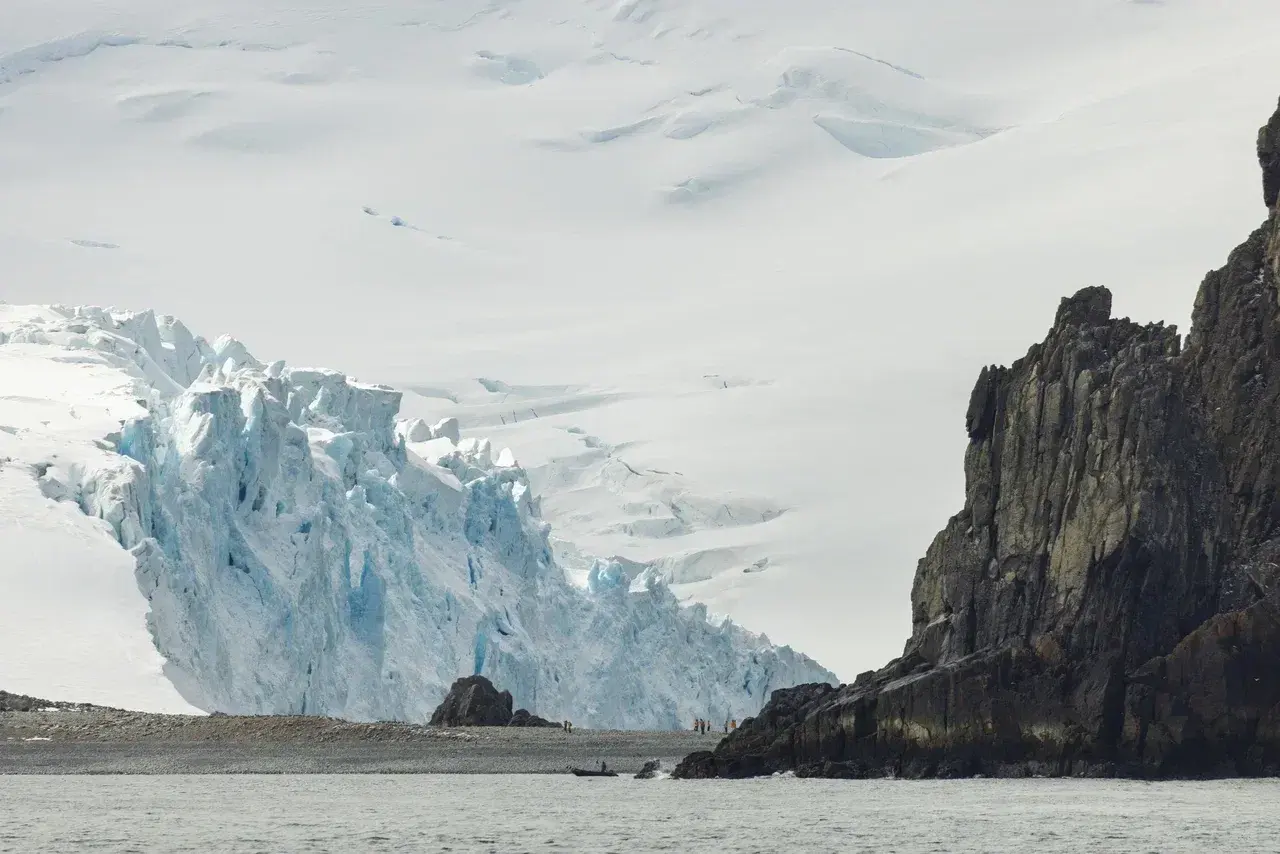
Depending on the program and conditions, activities can include observing and counting penguins and pinnipeds, monitoring wildlife camera traps, documenting elephant seals, observing changes around Bellingshausen Glacier and collecting marine debris.
No scientific background is required.
The purpose is to experience Antarctica not simply as scenery, but as an ecosystem that people are actively studying and protecting.
Experience Antarctica From a Polar Station
The Antarctic Science Camp also provides an unusual alternative to conventional tourist accommodation.
Rather than staying aboard a large cruise ship, participants spend several days at Bellingshausen Station.
You experience the daily rhythm of polar life, explore King George Island on foot and, when weather permits, travel through surrounding waters by Zodiac.
There are no luxury hotel services or artificial attractions.
Instead, the value comes from being immersed in the environment: waking up at a polar station, meeting people involved in Antarctic work and learning how life operates in such a remote place.
For travelers interested in responsible Antarctica tourism, this kind of experience can create a much deeper understanding of why the region needs protection.
How Can Tourists Reduce Their Impact?
Choosing the right expedition is only one part of responsible travel.
Visitors should follow biosecurity procedures carefully, keep the required distance from wildlife, never leave waste behind and follow instructions from expedition leaders.
It is also worth considering the scale and philosophy of the operator before booking.
Ask how many people will travel with you. Understand how wildlife encounters are managed. Look at how the expedition approaches environmental rules. And consider whether you want to simply observe Antarctica or actively learn about the environment you are visiting.
Responsible tourism begins before you arrive.
Should We Travel to Antarctica?
There is no simple answer.
Antarctica does not need mass tourism, and traveling there should never be treated as casually as visiting another holiday destination.
But carefully managed expeditions can give people an extraordinary opportunity to understand a part of the planet that most will otherwise know only through photographs and documentaries.
The experience can change the way travelers think about wildlife, climate, oceans and wilderness.
The important question is therefore not only whether you should visit Antarctica.
It is how you choose to visit.
Travel in a small group. Respect wildlife. Accept that nature controls the itinerary. Learn from the people who work there. Leave as little behind as possible.
And choose an expedition where Antarctica itself — rather than onboard entertainment or luxury — remains the focus.
MoreTime Expeditions offers small-group sailing journeys and the Antarctic Science Camp for travelers who want to experience Antarctica as an expedition, learn about its environment and approach the White Continent with curiosity and respect.